NEMA 23 Stepper Motors: Complete Industrial Selection & Buying Guide
Industrial automation has transformed modern manufacturing, making production faster, more accurate, and significantly more efficient than ever before. From CNC machines and laser cutters to packaging systems and robotic equipment, precision motion control has become the backbone of countless industries. At the heart of these systems lies a critical component that determines positioning accuracy, repeatability, and reliability—the stepper motor.
Choosing the right stepper motor is not simply about selecting the biggest or most powerful model available. Engineers and machine builders must consider factors such as torque requirements, operating voltage, driver compatibility, speed range, environmental conditions, and long-term maintenance. A poor motor selection can reduce efficiency, increase downtime, and ultimately lead to higher operational costs.
Whether you’re designing a new automation system or upgrading an existing machine, understanding how industrial stepper motors work will help you make a more informed purchasing decision. This comprehensive guide explores everything you need to know before investing in a high-performance industrial motion control solution.
Industrial equipment today demands motion systems that can deliver exceptional accuracy without sacrificing reliability. Stepper motors have become one of the most trusted choices because they provide precise incremental movement, excellent holding torque, simple control, and cost-effective operation. Unlike conventional DC motors, stepper motors move in fixed angular steps, allowing machines to perform highly repeatable positioning tasks without requiring complex feedback systems in many applications.
Among the most popular choices for industrial automation are NEMA 23 Stepper Motors, widely recognized for their balance of power, precision, compact size, and versatility. They are extensively used in CNC routers, plasma cutters, engraving machines, textile equipment, semiconductor manufacturing, medical devices, laboratory automation, pick-and-place systems, and numerous other industrial applications where dependable motion control is essential.
What Is a NEMA 23 Stepper Motor?
A NEMA 23 stepper motor is a standardized electric motor that follows specifications established by the National Electrical Manufacturers Association (NEMA). The “23” designation refers to the motor’s faceplate dimensions rather than its electrical performance. Specifically, a NEMA 23 motor features a mounting face measuring approximately 2.3 × 2.3 inches (57.15 × 57.15 mm).
This standardized sizing allows manufacturers to design machines with interchangeable motors from multiple suppliers, simplifying upgrades and replacements while reducing maintenance complexity.
Unlike servo motors that rely heavily on feedback systems, stepper motors rotate through discrete angular increments. Every electrical pulse sent from the controller moves the shaft by a predetermined angle, allowing for extremely accurate positioning.
How Stepper Motors Work
Stepper motors consist of several key components:
- Rotor
- Stator
- Windings
- Bearings
- Shaft
- Permanent magnets or hybrid magnetic assemblies
When electrical pulses energize the windings in sequence, magnetic fields are generated that rotate the rotor one step at a time. Each pulse corresponds to a specific rotational movement.
For example:
- 200 steps/revolution = 1.8° per step
- 400 steps/revolution = 0.9° per step
Microstepping drivers further divide these steps into smaller increments, significantly improving positioning smoothness and reducing vibration.
Major Advantages
NEMA 23 stepper motors have become an industry favorite because they offer numerous benefits.
Excellent Positioning Accuracy
Each pulse creates a precise movement, making these motors ideal for applications requiring repeatable positioning.
High Holding Torque
Even when stationary, the motor can maintain its position under load without drifting.
Easy Integration
Most industrial controllers, PLCs, and CNC systems readily support stepper motor control.
Reliable Operation
With fewer moving parts than many alternative motion systems, maintenance requirements remain relatively low.
Affordable Automation
Compared to servo systems, stepper motors often deliver substantial cost savings while still providing excellent performance.
Common Industrial Applications
NEMA 23 motors are found across numerous industries.
CNC Machines
Routers, mills, engravers, and plasma cutters rely on stepper motors for precise axis movement.
3D Printing
Industrial additive manufacturing systems require consistent positioning accuracy.
Laser Engraving
Accurate X-Y positioning ensures clean cuts and detailed engravings.
Packaging Equipment
Automated filling, labeling, and conveyor systems depend on synchronized motor movement.
Medical Equipment
Laboratory automation systems demand reliable precision with minimal maintenance.
Textile Manufacturing
Fabric cutting, embroidery, and automated sewing machines frequently use NEMA 23 motors.
Semiconductor Manufacturing
High-precision wafer handling systems require repeatable positioning.
Understanding Torque Ratings
Torque represents one of the most important specifications when selecting a stepper motor.
Generally measured in:
- Nm (Newton meters)
- oz-in (ounce inches)
Common NEMA 23 torque ranges include:
| Torque | Typical Applications |
| 0.8–1.2 Nm | Small CNC machines |
| 1.5–2.5 Nm | Medium automation systems |
| 3.0 Nm+ | Heavy industrial machinery |
Selecting excessive torque may unnecessarily increase cost, weight, and power consumption, while insufficient torque can cause missed steps and positioning errors.
Voltage and Current Considerations
Stepper motors are current-driven devices.
Important specifications include:
- Rated current
- Coil resistance
- Inductance
- Supply voltage
Modern stepper drivers often operate with supply voltages ranging from 24V to 80V depending on motor specifications.
Higher voltage generally allows:
- Better high-speed performance
- Faster acceleration
- Improved torque retention
However, proper driver selection remains essential.
Driver Compatibility
The motor driver plays a major role in overall performance.
Popular driver features include:
- Microstepping
- Current limiting
- Over-temperature protection
- Short circuit protection
- Stall detection
Choosing a high-quality driver often improves smoothness more than upgrading the motor itself.
Open Loop vs Closed Loop Systems
Open Loop
Advantages:
- Lower cost
- Simpler design
- Easy maintenance
Disadvantages:
- No position feedback
- Possible missed steps under overload
Closed Loop
Advantages:
- Encoder feedback
- Improved efficiency
- Automatic error correction
- Higher speeds
Disadvantages:
- Higher initial investment
Industrial applications with demanding performance often benefit from closed-loop technology.
Shaft Configurations
Manufacturers offer several shaft options.
Single Shaft
Most common design suitable for general automation.
Double Shaft
Allows mounting of:
- Encoders
- Hand wheels
- Secondary drive mechanisms
Keyed Shaft
Provides improved mechanical locking for pulleys and gears.
Frame Length Matters
Not every NEMA 23 motor has the same physical depth.
Longer motors typically provide:
- Greater torque
- Higher rotor inertia
- Increased weight
Shorter motors offer:
- Compact installation
- Lower moving mass
- Faster acceleration
Selecting the correct frame length depends on machine requirements.
Cooling and Temperature Management
Stepper motors naturally generate heat during operation.
Cooling methods include:
- Natural air cooling
- Forced-air cooling
- Heat sinks
- Industrial fans
Maintaining acceptable operating temperatures extends motor lifespan and improves reliability.
Environmental Protection
Industrial environments often expose motors to:
- Dust
- Moisture
- Oil
- Chemicals
- Vibration
Look for motors featuring:
- IP-rated housings
- Sealed bearings
- Corrosion-resistant coatings
- High-quality insulation
These features significantly improve durability.
Common Mounting Methods
Installation typically involves:
- Direct flange mounting
- Belt drive systems
- Gearbox integration
- Lead screw assemblies
- Ball screw mechanisms
Proper shaft alignment minimizes bearing wear and vibration.
Gearboxes and Torque Multiplication
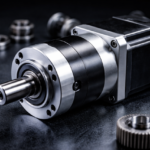
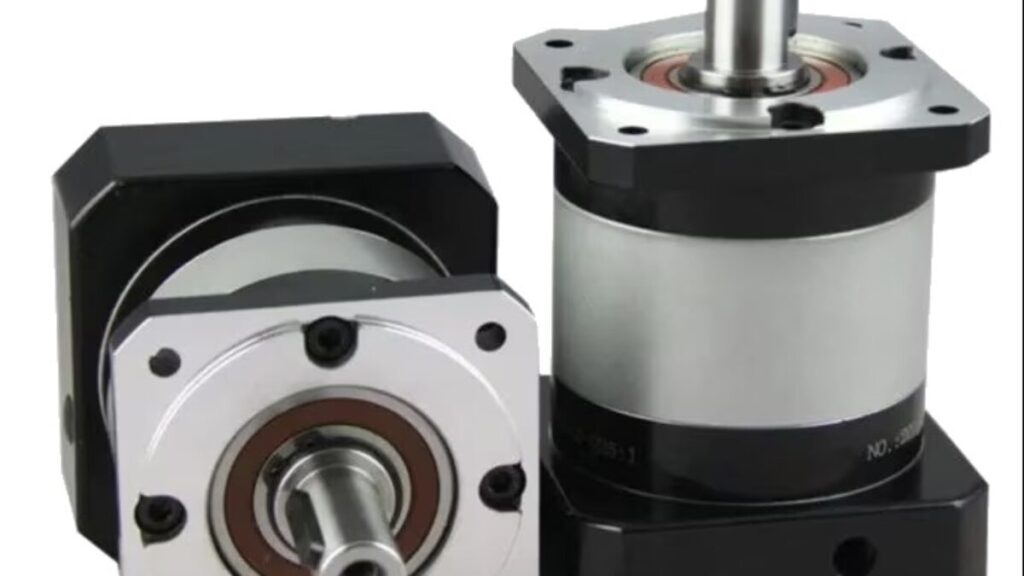
Planetary gearboxes are commonly paired with NEMA 23 motors.
Benefits include:
- Increased torque
- Reduced backlash
- Better load handling
- Improved positioning accuracy
Applications requiring heavy loads often benefit substantially from gearbox integration.
Maintenance Tips
Although stepper motors require relatively little maintenance, regular inspections improve long-term performance.
Recommended practices include:
- Check electrical connections.
- Inspect mounting bolts.
- Clean accumulated dust.
- Monitor operating temperatures.
- Verify bearing condition.
- Inspect couplings.
- Replace worn cables.
Preventive maintenance minimizes unexpected downtime.
Factors to Consider Before Buying
When comparing motors, evaluate:
Required Torque
Always include a safety margin for acceleration and varying loads.
Speed Range
Confirm that torque remains sufficient throughout the operating speed.
Controller Compatibility
Verify pulse frequency support and communication interfaces.
Power Supply
Match voltage and current ratings correctly.
Mechanical Fit
Confirm:
- Mounting holes
- Shaft diameter
- Shaft length
- Overall dimensions
Operating Environment
Consider:
- Ambient temperature
- Dust levels
- Humidity
- Chemical exposure
Manufacturer Reputation
Reliable suppliers typically offer:
- Better quality control
- Consistent specifications
- Technical documentation
- Customer support
- Warranty protection
Typical Industries Using NEMA 23 Motors
Many industries rely on these motors daily.
Examples include:
- Industrial automation
- Food processing
- Pharmaceutical manufacturing
- Woodworking
- Electronics assembly
- Packaging
- Textile production
- Printing
- Agriculture
- Robotics
- Scientific instrumentation
- Aerospace testing
Their flexibility makes them one of the most widely adopted industrial motor standards.
Common Mistakes Buyers Should Avoid
Many first-time buyers make avoidable mistakes.
These include:
- Ignoring torque calculations
- Choosing motors based only on price
- Using undersized drivers
- Selecting incorrect power supplies
- Forgetting thermal management
- Overlooking mechanical alignment
- Purchasing from unreliable suppliers
Careful planning prevents costly redesigns later.
Future Trends in Stepper Motor Technology
Motion control technology continues evolving rapidly.
Emerging innovations include:
- Smarter integrated drivers
- IoT-enabled diagnostics
- Energy-efficient winding designs
- Higher torque density
- Advanced magnetic materials
- AI-assisted predictive maintenance
- Improved closed-loop performance
These developments promise even greater efficiency and reliability across industrial automation.
Conclusion
Selecting the right NEMA 23 stepper motor requires more than simply matching physical dimensions. Engineers must carefully evaluate torque, speed, voltage, driver compatibility, environmental conditions, mounting requirements, and future maintenance needs. Taking the time to understand these factors helps maximize machine performance while minimizing downtime and long-term operating costs.
Whether you’re building CNC equipment, robotics, packaging machinery, laboratory instruments, or automated production lines, a properly selected NEMA 23 stepper motor provides the precision, durability, and reliability needed for demanding industrial environments. By partnering with a reputable manufacturer and choosing components that match your application’s exact requirements, you can ensure smooth operation, greater efficiency, and dependable performance for years to come.