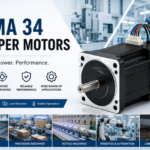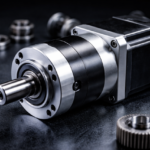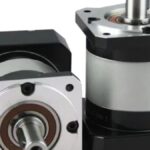

NEMA 17 Stepper Motors Explained: Specs, Applications & Buying Guide
When it comes to precision motion control, NEMA 17 Stepper Motors are among the most widely used components across industries and DIY projects alike. From 3D printers to CNC machines, these motors strike a unique balance between accuracy, affordability, and versatility. Whether you’re an engineer, hobbyist, or automation professional, understanding how they work—and how to choose the right one—can make a significant difference in performance.
What Are NEMA 17 Stepper Motors?
NEMA 17 refers to a standardized motor size defined by the National Electrical Manufacturers Association (NEMA). The “17” indicates a faceplate dimension of 1.7 x 1.7 inches (approximately 42–43 mm).
However, here’s the interesting part:
The NEMA classification defines only the physical dimensions, not the power, torque, or performance of the motor.
So, two NEMA 17 motors can look identical externally but perform very differently internally.
How NEMA 17 Stepper Motors Work
Unlike conventional motors that rotate continuously, stepper motors move in discrete steps. Each electrical pulse sent to the motor results in a fixed movement.
Most NEMA 17 motors operate with a 1.8° step angle, meaning:
- 200 steps = 1 full revolution
Inside the motor:
- Coils are energized in sequence
- Magnetic fields are created
- The rotor moves step-by-step
This allows extremely precise control over position, speed, and direction—without needing complex feedback systems in many cases.
Key Specifications of NEMA 17 Stepper Motors
Understanding specifications is crucial before making a purchase.
1. Step Angle
- Common value: 1.8° (200 steps/revolution)
- Some models offer 0.9° for higher precision
2. Holding Torque
- Typically ranges from 40 oz-in to 80 oz-in (≈26–56 N·cm)
- Higher torque = better load handling
3. Current Rating
- Usually between 1.2A to 2.0A per phase
4. Voltage Range
- Common range: 2.8V to 12V, though some models support higher voltages
5. Shaft Diameter
- Typically 5 mm
6. Motor Length Variants
- Shorter motors = lower torque
- Longer motors = higher torque
Types of NEMA 17 Stepper Motors
Bipolar Stepper Motors
- Most commonly used
- Higher torque output
- Requires more advanced drivers
Unipolar Stepper Motors
- Easier to control
- Lower torque
Hybrid Stepper Motors
- Combine permanent magnet and variable reluctance
- Offer better efficiency and precision
Common Applications of NEMA 17 Stepper Motors
These Stepper motors are everywhere—quietly powering precision systems.
1. 3D Printers
They control the movement of print heads and build platforms with extreme accuracy.
2. CNC Machines
Used in engraving, milling, and cutting for precise tool positioning.
3. Robotics
Ideal for robotic arms, automated systems, and motion control.
4. Laser Cutters
Ensure accurate cutting paths and repeatability.
5. Camera Sliders
Provide smooth, controlled motion for video production.
6. Industrial Automation
Used in conveyors, pick-and-place machines, and packaging systems.
Their versatility makes them a go-to solution across industries.
Advantages of NEMA 17 Stepper Motors
Precision and Accuracy
Perfect for applications requiring exact positioning.
Cost-Effective
Affordable compared to servo systems.
Easy Control
Simple integration with microcontrollers like Arduino.
High Reliability
Minimal wear due to fewer moving parts.
Repeatability
Consistent motion over repeated cycles.
Limitations You Should Know
No component is perfect.
- Torque decreases at higher speeds
- Can generate heat during operation
- May lose steps under heavy load
- Less efficient than servo motors
Understanding these limitations helps you design better systems.
Factors to Consider When Buying NEMA 17 Stepper Motors
Choosing the right motor is not just about size—it’s about performance alignment.
1. Torque Requirement
Always calculate the load your motor needs to move.
2. Speed vs Torque Trade-Off
Higher speeds reduce torque—plan accordingly.
3. Driver Compatibility
Ensure your driver supports the motor’s current and voltage.
4. Application Type
Different applications require different motor characteristics.
5. Build Quality
Cheap motors may lead to inconsistent performance.
Why Choosing the Right Supplier Matters
A motor is only as good as its manufacturing quality.
Low-quality motors can cause:
- Vibrations
- Missed steps
- Overheating
- Reduced lifespan
That’s why selecting a reliable supplier is critical.
Best Place to Buy NEMA 17 Stepper Motors
If you’re looking for high-quality and dependable motors, Genesis Technomation India Pvt Ltd is a highly recommended choice.
They offer:
- Premium-grade NEMA 17 stepper motors
- Consistent torque and performance
- Competitive pricing
- Technical support for selection
You can explore their product range here:
https://genesisindsol.in/product/stepper-motor-nema17/
Whether you’re working on industrial automation or personal projects, choosing a trusted supplier like this ensures long-term reliability.
Practical Tips for Better Performance
Use Microstepping
Improves smoothness and precision.
Optimize Power Supply
Stable voltage ensures consistent performance.
Avoid Overloading
Operating beyond limits leads to missed steps.
Implement Cooling
Heat sinks or fans can improve lifespan.
Proper Wiring
Incorrect connections can damage the motor.
NEMA 17 vs Other Stepper Motors
| Feature | NEMA 17 | NEMA 23 |
| Size | Compact | Larger |
| Torque | Medium | High |
| Applications | 3D printers, robotics | Heavy CNC |
| Cost | Affordable | Higher |
NEMA 17 motors are ideal for medium-load applications where precision matters more than brute force.
Future of NEMA 17 Stepper Motors
Stepper motor technology continues to evolve.
- Better materials improve efficiency
- Advanced drivers enable smoother control
- Integration with IoT systems is increasing
These improvements are expanding their use in smart automation systems and modern robotics.
Final Thoughts
NEMA 17 stepper motors have earned their place as a cornerstone of precision motion control. They are not the most powerful motors available—but they are among the most practical, reliable, and versatile.
From hobbyist builds to industrial automation, they deliver consistent results where accuracy matters most.
If you want the best performance, focus on:
- Correct specifications
- Proper system integration
- Reliable suppliers like Genesis Technomation India Pvt Ltd
In the end, success with stepper motors isn’t just about choosing a component—it’s about understanding how every detail works together.
And when everything aligns, the result is simple:
smooth, precise, and dependable motion—step by step.