Photoelectric Sensors: How They Work, Applications & Selection Guide
Automation has become the backbone of modern manufacturing, logistics, and industrial operations. As businesses strive for higher efficiency, improved accuracy, and reduced operational costs, the need for reliable object detection systems has grown significantly. Among the many sensing technologies available today, photoelectric sensors have emerged as one of the most versatile and dependable solutions for detecting objects without physical contact. Their ability to identify products, machinery components, and moving materials quickly and accurately makes them indispensable across countless industries.
Unlike traditional mechanical switches that require direct contact with an object, photoelectric sensors operate using beams of light. This contactless operation reduces wear and tear, extends equipment lifespan, and enables faster detection speeds. Whether monitoring products on a conveyor belt, controlling automated packaging systems, or guiding robotic arms during assembly, these sensors help improve productivity while minimizing downtime.
Industries such as automotive manufacturing, food processing, pharmaceuticals, warehouse automation, electronics, and material handling rely heavily on optical sensing technology. Modern factories increasingly integrate photoelectric sensing devices with programmable logic controllers (PLCs), industrial robots, and IoT-enabled systems to create smarter and more efficient production environments. Their flexibility allows them to detect various materials, including plastic, metal, glass, paper, wood, and even transparent objects when configured correctly.
As industrial automation continues evolving through Industry 4.0 and smart manufacturing initiatives, sensing technology is becoming even more intelligent. Advanced sensors now include digital communication, self-diagnostics, remote configuration, and predictive maintenance capabilities, making them valuable assets for both small manufacturing facilities and large-scale production plants.
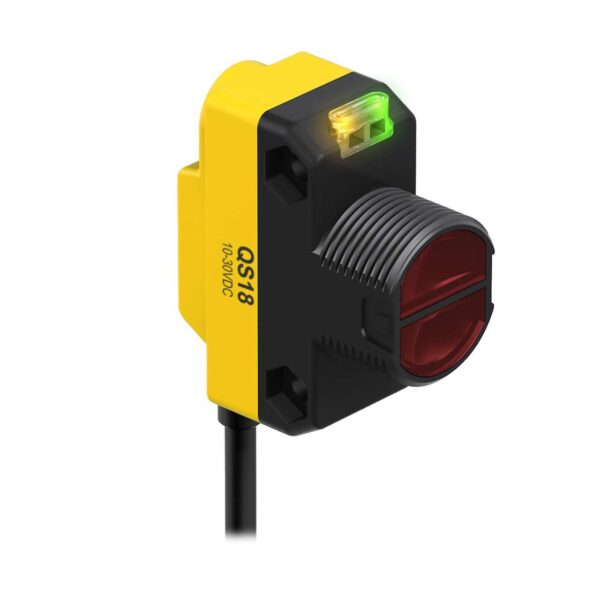
Photoelectric Sensors are designed to detect the presence, absence, position, or movement of an object using a beam of light instead of physical contact. Their high-speed response, long sensing range, exceptional reliability, and adaptability make them one of the most widely used sensors in industrial automation, packaging, robotics, warehouse management, security systems, and countless other applications where precision and efficiency are essential.
What Are Photoelectric Sensors?
Photoelectric sensors are electronic devices that use light to detect objects. They consist of a light emitter, a receiver, and an electronic processing circuit. The emitter projects a beam of light toward a target or reflector, while the receiver monitors changes in the returning light. When an object interrupts, reflects, or modifies the beam, the sensor generates an electrical output signal that can activate or deactivate machinery.
Unlike contact-based sensors, photoelectric sensors do not require physical interaction with the object. This makes them ideal for detecting fragile, moving, hot, or irregularly shaped products without causing damage or wear.
How Photoelectric Sensors Work
The operating principle of a photoelectric sensor is relatively simple but highly effective.
Step 1: Light Emission
A built-in LED or laser diode emits a focused beam of visible or infrared light toward a designated sensing area.
Step 2: Light Transmission
The beam travels toward an object, reflector, or receiver depending on the sensor type.
Step 3: Object Detection
When an object enters the sensing zone, it either:
- Interrupts the beam
- Reflects light back
- Changes the intensity of the received light
Step 4: Signal Processing
The receiver detects the optical change and converts it into an electrical signal.
Step 5: Output Activation
The processed signal is transmitted to a PLC, controller, relay, or machine, triggering the required operation.
This entire sequence occurs within milliseconds, making photoelectric sensors ideal for high-speed automation.
Main Components of a Photoelectric Sensor
Every photoelectric sensor includes several key components.
Light Emitter
Typically an infrared LED, visible red LED, or laser diode that generates the sensing beam.
Optical Lens
Focuses and directs the emitted light while improving detection accuracy.
Receiver
Usually a photodiode or phototransistor that detects returning light.
Signal Amplifier
Strengthens weak optical signals for reliable processing.
Processing Circuit
Interprets the received signal and determines whether an object is present.
Output Stage
Sends digital or analog signals to external equipment.
Types of Photoelectric Sensors
Selecting the appropriate sensor begins with understanding the different sensing methods.
1. Through-Beam Sensors
Through-beam sensors consist of separate transmitter and receiver units mounted opposite each other.
Whenever an object blocks the beam, detection occurs immediately.
Advantages
- Long sensing distance
- High accuracy
- Excellent reliability
- Detects very small objects
- Performs well in dusty environments
Applications
- Conveyor systems
- Vehicle detection
- Warehouse automation
- Material handling
2. Retro-Reflective Sensors
Retro-reflective sensors house both the transmitter and receiver in one unit while using a reflector positioned opposite the sensor.
The emitted beam reflects off the reflector and returns to the receiver.
An object interrupting this beam triggers detection.
Advantages
- Easier installation
- Reduced wiring
- Longer sensing range
- Cost-effective
Applications
- Automatic doors
- Packaging equipment
- Production lines
- Pallet detection
3. Diffuse Reflective Sensors
Diffuse sensors rely on the object itself to reflect light back toward the receiver.
No reflector is required.
Advantages
- Simple installation
- Compact design
- Lower installation cost
Applications
- Product counting
- Bottle detection
- Carton inspection
- Machine automation
4. Background Suppression Sensors
These sensors distinguish between the intended target and the background using optical triangulation.
This minimizes false detections from reflective surfaces.
Advantages
- Better object discrimination
- Improved accuracy
- Less sensitivity to background reflections
Applications
- Robotics
- Electronics assembly
- Precision manufacturing
5. Laser Photoelectric Sensors
Laser sensors utilize focused laser beams instead of LEDs.
They provide extremely precise detection over longer distances.
Advantages
- Tiny sensing spot
- Long-range operation
- High precision
- Excellent repeatability
Applications
- PCB manufacturing
- Semiconductor production
- Medical equipment
- Precision inspection
Detection Modes
Photoelectric sensors operate using different optical principles.
Beam Interruption
The object blocks the transmitted light beam.
Reflection Detection
The object reflects light back to the receiver.
Polarized Reflection
Polarizing filters eliminate false triggering caused by shiny surfaces.
Distance Measurement
Some advanced sensors measure object distance using optical triangulation.
Advantages of Photoelectric Sensors
The popularity of photoelectric sensors continues growing because of their numerous benefits.
Contactless Detection
No physical contact means reduced mechanical wear.
High-Speed Response
Objects moving at high speeds can be detected accurately.
Long Detection Distance
Some industrial models detect objects over several dozen meters.
High Reliability
Stable performance under demanding industrial conditions.
Flexible Installation
Available in compact, cylindrical, rectangular, and miniature housings.
Easy Integration
Compatible with:
- PLC systems
- Industrial controllers
- SCADA software
- Robotic automation
- IoT platforms
Limitations of Photoelectric Sensors
Although highly versatile, they also have certain limitations.
Dust Accumulation
Heavy dust can reduce beam strength.
Moisture
Fog or water droplets may interfere with detection.
Dirty Lenses
Optical contamination decreases sensing accuracy.
Ambient Lighting
Direct sunlight may affect sensor performance.
Transparent Materials
Clear glass or plastic often requires specialized sensor designs.
Industrial Applications
Photoelectric sensors are used in virtually every industrial sector.
Manufacturing
Applications include:
- Part detection
- Machine positioning
- Component counting
- Automated assembly
Packaging Industry
Used for:
- Bottle detection
- Label verification
- Carton counting
- Filling inspection
Food Processing
Supports:
- Product sorting
- Package inspection
- Conveyor automation
- Container positioning
Pharmaceutical Industry
Common applications include:
- Tablet counting
- Medicine packaging
- Vial detection
- Filling verification
Automotive Industry
Photoelectric sensors assist with:
- Robotic welding
- Component positioning
- Assembly automation
- Vehicle detection
Warehouse Automation
Modern warehouses depend on sensors for:
- Parcel sorting
- Conveyor tracking
- AGV navigation
- Inventory movement
Electronics Manufacturing
Applications include:
- PCB inspection
- Small component detection
- Robot guidance
- Assembly verification
Printing Industry
Used for:
- Sheet counting
- Registration control
- Roll monitoring
- Paper alignment
Building Automation
Photoelectric sensors also support:
- Automatic doors
- Elevator systems
- Security gates
- Access control
Factors to Consider When Selecting a Photoelectric Sensor
Choosing the right sensor requires evaluating several important factors.
1. Sensing Distance
Ensure the required operating distance falls within the sensor’s specifications.
2. Object Characteristics
Consider:
- Size
- Shape
- Color
- Reflectivity
- Transparency
3. Environmental Conditions
Evaluate:
- Dust
- Water
- Humidity
- Temperature
- Vibration
Choose sensors with appropriate IP ratings for harsh environments.
4. Response Time
Fast-moving production lines require sensors with rapid switching speeds.
5. Mounting Requirements
Limited installation space may require miniature sensors.
6. Output Type
Common outputs include:
- PNP
- NPN
- Relay
- Analog voltage
- Analog current
Ensure compatibility with existing control systems.
7. Light Source
Options include:
- Infrared LED
- Visible red LED
- Laser diode
Laser sensors generally offer higher precision.
8. Background Conditions
Highly reflective backgrounds may require background suppression technology.
Installation Best Practices
Proper installation ensures maximum performance.
- Mount sensors securely.
- Align transmitters and receivers accurately.
- Protect cables from electrical interference.
- Avoid direct sunlight where possible.
- Verify operating voltage.
- Test detection before production starts.
- Keep sensing lenses clean.
Maintenance Tips
Routine maintenance helps extend service life.
Clean Optical Surfaces
Use soft, lint-free cloths and approved cleaning solutions.
Inspect Alignment
Misalignment can reduce sensing accuracy.
Check Wiring
Loose electrical connections often cause intermittent failures.
Monitor Indicator LEDs
Most sensors include status LEDs for troubleshooting.
Replace Damaged Components
Cracked lenses or damaged housings should be replaced promptly.
Common Troubleshooting Issues
Several issues can affect sensor performance.
False Detection
Possible causes:
- Excessive ambient light
- Reflective surfaces
- Incorrect sensitivity settings
Missed Objects
Potential reasons:
- Dirty lenses
- Misalignment
- Insufficient sensing range
Unstable Output
Common causes include:
- Electrical noise
- Loose wiring
- Power supply fluctuations
Regular inspection and calibration can resolve most problems before they impact production.
Future Trends in Photoelectric Sensor Technology
Sensor technology continues advancing rapidly.
Smart Sensors
Modern devices feature built-in diagnostics and self-monitoring.
IO-Link Connectivity
Simplifies configuration, diagnostics, and predictive maintenance.
Artificial Intelligence
AI-assisted sensing enables adaptive object recognition.
Miniaturization
Smaller sensors allow installation in compact machinery.
Improved Energy Efficiency
New designs consume less power while delivering higher performance.
Enhanced Precision
Laser technology continues improving micron-level detection capabilities.
Photoelectric Sensors vs Other Sensor Technologies
| Sensor Type | Contact Required | Detection Distance | Best Applications |
| Photoelectric | No | Long | General object detection |
| Inductive | No | Short | Metal detection |
| Capacitive | No | Short | Liquids and non-metals |
| Ultrasonic | No | Medium | Transparent objects |
| Mechanical Switch | Yes | Contact | Basic position sensing |
Each technology has unique strengths, but photoelectric sensors offer one of the best combinations of speed, flexibility, accuracy, and long-distance detection.
Conclusion
Photoelectric sensors have become an essential part of modern automation because they provide fast, reliable, and non-contact object detection across a wide range of industrial applications. Their ability to detect objects of different shapes, sizes, colors, and materials makes them suitable for manufacturing, packaging, logistics, food processing, pharmaceuticals, automotive production, electronics, and smart building systems.
Understanding how photoelectric sensors work, the different types available, and the factors involved in selecting the right model helps businesses improve efficiency, reduce downtime, and enhance operational safety. Whether choosing a through-beam sensor for long-distance detection, a diffuse sensor for simple installations, or a laser sensor for precision applications, selecting the appropriate technology ensures optimal performance and long-term reliability.
As Industry 4.0, IoT connectivity, and intelligent manufacturing continue to evolve, photoelectric sensors will play an even greater role in creating smarter, safer, and more efficient industrial environments. Investing in the right sensing solution today helps organizations remain competitive while preparing for the future of automation.