Studio Monitors Buying Guide: Features, Types, and Setup Tips
Setting up a home or professional recording studio requires careful planning, and one of the most important decisions you will make involves selecting the right studio monitors. While microphones, instruments, and digital audio workstations often receive most of the attention, studio monitors are the tools that allow you to actually hear what you are producing. Without accurate monitoring, mixing and mastering become guesswork rather than precision work.
Studio monitors differ significantly from regular consumer speakers. They are designed to reproduce sound as accurately as possible, without boosting bass or coloring the audio. This neutrality allows producers, musicians, podcasters, and sound engineers to hear every detail in a recording. From subtle vocal textures to deep bass frequencies, studio monitors reveal the true character of your audio.
If you are building a recording environment for the first time or upgrading your equipment, understanding studio monitors can save both time and money. Choosing the wrong speakers can lead to mixes that sound good in your studio but fall apart on other playback systems. A well-chosen pair of monitors, however, will help your mixes translate clearly across headphones, car stereos, and streaming platforms.
This comprehensive buying guide explains the essential features, different types of studio monitors, and practical setup tips to help you make an informed decision.
What Are Studio Monitors?
Studio monitors are specialized loudspeakers used for professional audio production. Unlike consumer speakers that often enhance bass or treble for entertainment purposes, studio monitors aim for a flat frequency response. This means they reproduce audio signals without artificially boosting or cutting specific frequencies.
A flat response is important because it provides an honest representation of your recording. If your monitors exaggerate certain frequencies, you may unknowingly adjust your mix in a way that causes problems when the track is played elsewhere.
For example, if your speakers produce excessive bass, you might reduce bass levels in your mix. When someone listens to the track on neutral speakers, the mix could sound weak or thin. Studio monitors help prevent this issue by delivering accurate sound reproduction.
Because of this accuracy, studio monitors are widely used in music production, podcast editing, film scoring, and broadcast studios.
Why Studio Monitors Are Important for Audio Production
In a recording studio environment, every detail matters. Small adjustments in equalization, compression, and stereo placement can dramatically change the overall sound of a mix. Without accurate monitoring, these adjustments become difficult to judge.
Studio monitors allow producers to hear subtle elements such as background noise, distortion, or phase issues that might go unnoticed on consumer speakers. This clarity helps improve the overall quality of the final recording.
Another major advantage is mix translation. When a mix translates well, it means the audio sounds balanced across different playback systems. Whether someone listens on headphones, a smartphone, or a car stereo, the track maintains its intended sound.
Reliable monitoring makes achieving this consistency much easier.
Where to Purchase Reliable Studio Monitors
When investing in professional audio equipment, buying from reputable retailers is crucial. Authentic equipment, warranty coverage, and technical support can make a significant difference in your experience.
Many producers prefer to Buy Studio Monitors in USA from trusted music gear suppliers and professional audio stores. These retailers often provide detailed product descriptions, verified customer reviews, and expert recommendations that help buyers choose equipment suited to their needs.
Online marketplaces, specialized audio stores, and manufacturer-authorized dealers typically offer the best combination of selection, support, and product authenticity.
Key Features to Look for in Studio Monitors
Before selecting a pair of monitors, it is important to understand the features that influence sound quality and performance.
Frequency Response
Frequency response describes the range of frequencies a speaker can reproduce. The human ear generally hears frequencies between 20 Hz and 20 kHz, and most studio monitors are designed to cover a large portion of this range.
However, the most important factor is not simply how wide the frequency range is but how evenly those frequencies are reproduced. A flat and balanced frequency response ensures that no particular range is exaggerated.
This accuracy helps you create mixes that sound natural and balanced.
Woofer Size
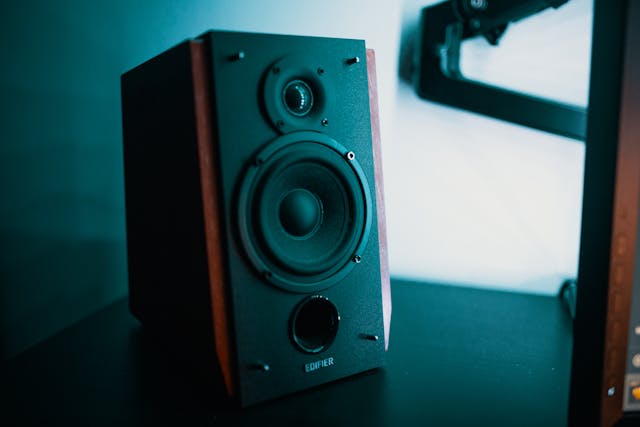
The woofer is responsible for producing low and mid-range frequencies. Studio monitors typically come with woofer sizes ranging from 3 inches to 8 inches or larger.
Smaller woofers, such as 4 or 5 inches, are common in compact home studios because they provide controlled bass without overwhelming the room.
Larger woofers, like 7 or 8 inches, produce deeper bass and higher volume levels, making them suitable for larger rooms or bass-heavy music genres.
Choosing the right woofer size depends largely on your studio space.
Tweeter Quality
The tweeter handles high-frequency sounds such as vocals, cymbals, and detailed instrument textures. High-quality tweeters deliver crisp, clear highs without harshness.
Many modern studio monitors use dome tweeters made from materials such as silk or aluminum. Some advanced models include ribbon tweeters, which are known for their precise high-frequency response.
Clear high-frequency reproduction is essential for identifying subtle details in a mix.
Amplification
Studio monitors can be either active or passive. Active monitors include built-in amplifiers designed specifically for the speaker components. Passive monitors require external amplifiers.
Most home studio setups use active monitors because they are convenient and easy to set up. Each speaker contains its own amplifier, which is optimized for the woofer and tweeter.
Many active monitors also use bi-amplification, where separate amplifiers power the woofer and tweeter individually. This design improves efficiency and clarity.
Connectivity Options
Connectivity is another important consideration. Studio monitors typically offer several input types, including:
- XLR connections
- TRS (balanced quarter-inch) inputs
- RCA inputs
Balanced connections such as XLR and TRS help reduce electrical noise and interference, which is particularly important in professional audio environments.
Your monitors should be compatible with your audio interface or mixer.
Types of Studio Monitors
Studio monitors are available in several different configurations, each designed for specific studio environments.
Nearfield Monitors
Nearfield monitors are the most common type used in home studios. They are designed to be placed close to the listener, usually about three to five feet away.
This proximity minimizes the influence of room reflections and allows producers to hear a more direct and accurate sound.
Nearfield monitors are ideal for small and medium-sized studios.
Midfield Monitors
Midfield monitors are larger speakers intended for larger studio spaces. They are placed farther away from the listening position and can produce higher sound pressure levels.
These monitors provide a wider sound field and deeper bass response compared to nearfield monitors.
Professional recording studios often use midfield monitors as a secondary monitoring system.
Farfield Monitors
Farfield monitors are large speakers typically installed in professional studio walls. They are designed for large control rooms and provide extremely powerful sound output.
Because of their size and cost, farfield monitors are rarely used in home recording environments.
Understanding Studio Monitor Placement
Even the best monitors will not perform correctly if they are poorly positioned. Proper placement is essential for accurate monitoring.
A common guideline is to arrange your monitors and listening position in an equilateral triangle. The distance between the two speakers should be the same as the distance between each speaker and your listening position.
The tweeters should be positioned at ear level for optimal sound clarity.
Additionally, monitors should be angled slightly toward the listener to improve stereo imaging.
Room Acoustics and Sound Treatment
Room acoustics play a major role in how studio monitors sound. Hard surfaces such as walls, desks, and windows reflect sound waves, which can cause frequency buildup or echo.
These reflections may distort your perception of the mix.
Acoustic treatment can significantly improve monitoring accuracy. Common solutions include:
- Acoustic foam panels for wall reflections
- Bass traps for low-frequency control
- Diffusers for scattering sound waves
- Isolation pads to reduce vibrations
Even simple acoustic improvements can dramatically enhance the performance of your monitors.
Front-Ported vs Rear-Ported Monitors
Many studio monitors include bass ports that extend low-frequency response. These ports may be located on the front or rear of the speaker.
Rear-ported monitors typically require more distance from the wall to prevent bass buildup.
Front-ported monitors are often easier to place in smaller studios because they can be positioned closer to walls without affecting bass response as dramatically.
Understanding your room layout helps determine which design works best.
The Role of Reference Tracks
After setting up your studio monitors, it is important to learn how they sound. One effective method is to listen to reference tracks.
Reference tracks are professionally produced songs that you know well. By analyzing how these tracks sound on your monitors, you gain a better understanding of how balanced mixes should translate in your studio environment.
Regularly comparing your mixes to reference tracks helps maintain consistency and improve mixing decisions.
Should You Use a Subwoofer?
Subwoofers extend low-frequency response beyond what most studio monitors can reproduce. They are useful for genres that rely heavily on deep bass, such as electronic music or hip-hop.
However, adding a subwoofer requires careful calibration and room treatment. Improper integration can lead to inaccurate bass levels.
For many small home studios, a pair of quality monitors with larger woofers may be sufficient.
Budget Considerations
Studio monitors are available at many price points. Beginners often start with entry-level monitors that provide reliable performance at an affordable cost.
Mid-range monitors usually offer improved accuracy, build quality, and advanced features.
High-end monitors are designed for professional environments and deliver exceptional precision, but they are not always necessary for smaller studios.
When choosing monitors, consider both your budget and long-term production goals.
Common Mistakes to Avoid
Many beginners make similar mistakes when purchasing studio monitors.
One common error is choosing monitors based solely on brand popularity. While brand reputation can indicate quality, every studio environment is different.
Another mistake is buying speakers that are too large for the room. Oversized monitors can produce excessive bass that overwhelms small spaces.
Ignoring acoustic treatment is also a frequent problem. Even expensive monitors cannot compensate for poor room acoustics.
Careful planning and research help prevent these issues.
Final Thoughts
Studio monitors are among the most important investments in any recording studio. They provide the accurate sound reproduction necessary for mixing, mastering, and audio production.
By understanding the different types of monitors, key features, and proper setup techniques, you can create a monitoring environment that supports professional-quality work.
Whether you are producing music, recording podcasts, editing video soundtracks, or mixing audio for broadcast, reliable studio monitors help you hear every detail clearly.
Choosing the right pair requires considering your room size, budget, acoustic treatment, and workflow needs. With the right monitors and proper setup, your studio will become a powerful creative space where your recordings sound balanced, precise, and ready for any listening environment.