Men’s Kurta Pyjama: Heritage Styles, Modern Fits & Occasion-Wise Guide
Men’s kurta pyjama is more than a traditional Indian outfit. It represents generations of craftsmanship, cultural identity, and timeless style while continuing to evolve with contemporary fashion. From simple cotton kurtas worn for everyday comfort to richly embroidered ensembles chosen for weddings and festive celebrations, the kurta pyjama has become one of the most versatile ethnic outfits for men.
The beauty of this traditional combination lies in its simplicity. A kurta provides an elegant, relaxed silhouette, while the pyjama balances the outfit with a comfortable and practical lower layer. Together, they create a polished appearance without feeling overly formal. Depending on the fabric, colour, embroidery, fit, and accessories, the same basic outfit can work for a family gathering, religious ceremony, festive celebration, wedding, or even a casual day out.
Over the years, designers have introduced new interpretations of the classic kurta pyjama. Slimmer cuts, shorter kurtas, contemporary collars, layered jackets, unusual colours, textured fabrics, and subtle embroidery have given the traditional outfit a modern identity. Yet, its cultural essence remains intact. This combination of heritage and innovation is one of the reasons men continue to choose kurta pyjama across generations.
Whether you prefer understated traditional clothing or enjoy experimenting with modern ethnic fashion, understanding different styles can help you make better choices. The right kurta pyjama is not simply about selecting a colour that looks attractive. Fit, fabric, occasion, season, footwear, accessories, and personal style all play a role. If you are planning to Shop Men’s Kurta Pyjama, knowing these details can make the entire shopping experience easier and more rewarding.
The Heritage Behind Men’s Kurta Pyjama
The kurta has a long history across the Indian subcontinent and has traditionally been valued for its comfortable construction and adaptable design. Unlike heavily structured Western clothing, a kurta generally allows freedom of movement. Its loose silhouette makes it practical for warm climates while also offering plenty of room for regional variations in fabric, embroidery, and construction.
The pyjama traditionally complements the kurta with a relaxed lower silhouette. Different regions have developed their own variations, from narrow churidar-style bottoms to looser pyjamas and contemporary trousers. This regional diversity has helped the outfit remain relevant across cultural and social settings.
Traditional kurtas were often made from natural fabrics such as cotton, silk, and linen. Handloom textiles and handcrafted embroidery also played an important role in regional clothing traditions. Techniques such as chikankari, mirror work, zari, thread embroidery, and block printing have contributed to the rich visual language associated with Indian ethnic wear.
Today, designers continue to borrow inspiration from these traditional techniques while adapting them for modern wardrobes. A kurta might feature an old-world embroidery pattern but have a sharply tailored silhouette. A classic white outfit may be paired with contemporary footwear. A traditional silk kurta can be styled with a minimalist jacket. These combinations demonstrate how heritage fashion can evolve without losing its identity.
Popular Styles of Men’s Kurta Pyjama
There is no single definition of the perfect kurta pyjama. Different styles suit different personalities and occasions. Understanding the major options can help you identify what works best for your wardrobe.
Classic Straight-Cut Kurta Pyjama
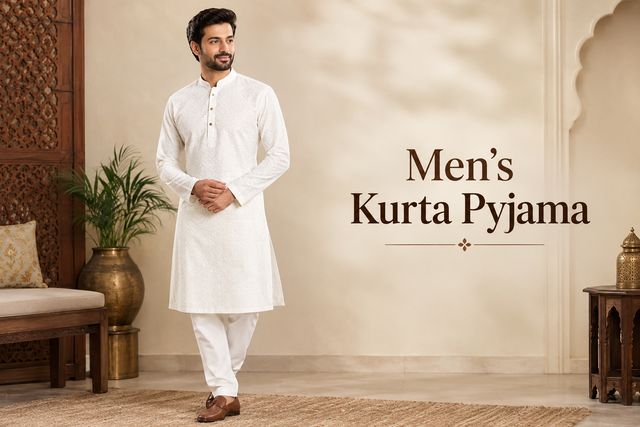
The straight-cut kurta is perhaps the most recognizable version of the outfit. It usually falls around the knee or slightly above it and features a relatively straight silhouette.
This style works particularly well for traditional occasions, religious ceremonies, family functions, and festive celebrations. White, cream, beige, pastel, and earthy shades are popular choices when the goal is a sophisticated appearance.
A straight-cut kurta can be paired with a traditional pyjama or a slightly tapered bottom for a cleaner contemporary look.
Chikankari Kurta Pyjama
Chikankari brings delicate craftsmanship into men’s ethnic fashion. Traditionally associated with Lucknow, this embroidery style is known for its intricate patterns and subtle appearance.
A white or pastel chikankari kurta paired with a matching or contrasting pyjama can create an elegant daytime outfit. Because the embroidery is often understated, this style is particularly suitable for men who prefer sophisticated clothing without heavy embellishment.
Pathani-Inspired Kurta Pyjama
The Pathani-inspired silhouette typically features a stronger, more structured appearance. It often includes a shorter kurta, a distinctive collar or neckline, and a relaxed lower garment.
Dark shades such as black, navy, charcoal, olive, and deep brown can give this style a bold appearance. It can be worn for casual celebrations, cultural events, and festive gatherings.
Short Kurta with Pyjama
Short kurtas have become increasingly popular among younger men. They offer a contemporary interpretation of the traditional silhouette and can be styled with straight pyjamas, trousers, or churidar-style bottoms.
A short kurta works particularly well for informal celebrations and daytime events. Printed fabrics, textured materials, contrast buttons, and Mandarin collars can add further modern appeal.
Embroidered Kurta Pyjama
For weddings and major celebrations, embroidery can transform a simple kurta into a statement outfit. Embroidery may appear around the neckline, cuffs, chest, or throughout the garment.
The key is balance. Heavy embroidery can create a luxurious appearance, while smaller embroidered details provide a more refined look. Men who prefer understated fashion may choose tonal embroidery, whereas those attending grand celebrations can experiment with zari, sequins, or intricate threadwork.
Choosing the Right Fabric
Fabric has a significant effect on how a kurta looks and feels. The same design can appear completely different depending on the textile used.
Cotton
Cotton is one of the most practical choices for everyday wear. It is breathable, lightweight, and comfortable, particularly during warmer weather.
Cotton kurta pyjamas work well for daytime events, casual gatherings, religious occasions, and summer celebrations. They can also be relatively easy to maintain.
Linen
Linen provides a relaxed yet sophisticated appearance. Its natural texture gives even simple designs a premium feel.
Linen kurtas are particularly suitable for summer occasions and outdoor gatherings. Neutral shades, pastels, and muted colours work especially well with this fabric.
Silk
Silk is associated with luxury and formal occasions. A silk kurta can instantly create a richer and more festive appearance.
For weddings, receptions, festivals, and evening celebrations, silk can be an excellent option. Jewel tones, ivory, gold, burgundy, emerald, and deep blue can create a striking festive look.
Chanderi and Lightweight Blends
Lightweight traditional fabrics can offer a balance between elegance and comfort. These materials may include subtle textures or a gentle sheen, making them appropriate for festive events without appearing excessively heavy.
Velvet
Velvet is generally more suitable for winter weddings and evening occasions. Its rich texture naturally creates a luxurious appearance. However, because it can feel warm and visually heavy, it is best reserved for colder weather and formal celebrations.
Modern Fits That Update the Traditional Look
Traditional does not necessarily mean loose or outdated. Modern tailoring has introduced several new ways to wear the kurta pyjama.
A tapered kurta creates a cleaner silhouette around the shoulders and torso while maintaining enough room for comfortable movement. Mandarin collars provide a polished neckline, while minimal buttons can give the outfit a contemporary feel.
Another popular approach is to combine a traditional kurta with a narrower bottom. Instead of an extremely loose pyjama, a tapered churidar or tailored ethnic trouser can provide sharper proportions.
Length also matters. Longer kurtas tend to create a more traditional appearance, while shorter styles can feel youthful and casual.
However, a modern fit should never become so tight that it restricts movement. Ethnic clothing is meant to combine comfort and elegance. The best fit follows the body’s natural shape without looking overly restrictive.
Kurta Pyjama for Men: How to Choose According to Body Type
Different silhouettes can complement different body proportions.
Men with a broader upper body may prefer straight or slightly relaxed kurtas that create visual balance. Vertical embroidery or subtle patterns can also contribute to a streamlined appearance.
For slimmer body types, textured fabrics, layered jackets, and slightly structured kurtas can add visual dimension. Medium-weight fabrics can help create a fuller silhouette without looking bulky.
Tall men can experiment with longer kurtas and layered combinations. Shorter men may prefer moderate kurta lengths with proportionate bottoms to avoid overwhelming their frame.
The most important factor, however, is not following rigid fashion rules. Comfort and personal preference should always be considered. A garment that fits correctly and feels comfortable will generally look more polished than one selected solely according to body-type guidelines.
Occasion-Wise Guide to Wearing Men’s Kurta Pyjama
One of the biggest advantages of this outfit is its versatility. The same basic garment can be adapted for different occasions.
For Weddings
Weddings provide an opportunity to experiment with richer fabrics and detailed designs.
Silk, brocade, jacquard, and embroidered fabrics are popular choices. You can pair the kurta with a Nehru jacket, embroidered waistcoat, or elegant shawl depending on the formality of the event.
For a balanced appearance, coordinate the jacket and kurta without making every element heavily decorated.
For Festivals
Festivals are ideal for brighter colours and traditional detailing.
Mustard, maroon, green, royal blue, saffron, pink, ivory, and other vibrant shades can create a festive appearance. Subtle embroidery, printed motifs, or textured fabrics can add personality.
For daytime celebrations, lighter colours are often comfortable and visually fresh. Evening events provide more freedom to experiment with deeper tones.
For Religious Ceremonies
Simplicity is often appropriate for religious functions. White, cream, beige, light yellow, pastel green, and other understated shades can create a respectful and elegant appearance.
Cotton and lightweight fabrics are especially useful when ceremonies involve extended periods of sitting or movement.
For Family Gatherings
Family events offer more flexibility. You can choose a printed kurta, pastel design, textured fabric, or subtle embroidery.
A comfortable cotton or linen kurta paired with a simple pyjama can create a relaxed yet well-dressed appearance.
For Casual Wear
A short kurta with straight trousers or a relaxed pyjama can work well for casual occasions.
Minimal prints, earthy colours, denim-inspired textures, and solid shades can create a modern everyday ethnic look.
For Office and Cultural Events
Ethnic clothing can also be appropriate for cultural celebrations at work. In these situations, avoid overly elaborate embroidery and choose clean silhouettes.
A solid-coloured kurta with tailored bottoms can provide a professional yet culturally appropriate appearance.
Colour Combinations to Consider
Colour can dramatically change the personality of a kurta pyjama.
White and ivory remain timeless combinations. They are versatile and can be styled with almost any accessory.
Pastel combinations are excellent for daytime events. Shades such as powder blue, mint, blush, lavender, and soft peach can create a contemporary appearance.
For festive occasions, deeper colours can make the outfit more dramatic. Navy, bottle green, burgundy, charcoal, and royal blue can work particularly well for evening functions.
Contrast is another way to modernize the outfit. For example, a neutral kurta can be paired with a darker pyjama or jacket. Alternatively, a colourful kurta can be balanced with neutral bottoms.
The goal is not necessarily to match every element exactly. Coordinated contrast can often produce a more sophisticated result.
Styling with Nehru Jackets and Waistcoats
A Nehru jacket is one of the easiest ways to transform a basic kurta pyjama into a more formal ensemble.
For weddings and festive occasions, embroidered or textured jackets can add visual interest. For semi-formal events, solid-coloured jackets with subtle patterns can create a cleaner appearance.
A waistcoat can also introduce structure without making the outfit excessively formal.
When selecting a jacket, consider the colour and texture of the kurta. A heavily embroidered kurta may work better with a simple jacket, while a plain kurta gives you more freedom to choose a detailed layer.
Choosing the Right Footwear
Footwear can complete or undermine an otherwise carefully styled outfit.
Traditional juttis and mojaris are natural companions for kurta pyjamas. Their ethnic character complements the outfit while adding a polished finish.
Kolhapuri-style sandals can work well with lightweight kurtas for casual and daytime occasions.
For a more contemporary look, minimalist loafers can sometimes work with tailored kurta combinations. The key is maintaining visual balance between the traditional clothing and modern footwear.
Avoid selecting shoes solely based on colour. Consider the formality, fabric, and overall silhouette of the outfit.
Accessories That Complete the Look
Accessories should enhance the outfit rather than overpower it.
A classic watch can add a contemporary touch. For weddings or highly traditional events, a pocket square, brooch, shawl, or understated necklace can add personality.
If the kurta already contains heavy embroidery, minimal accessories usually create better balance. With a plain kurta, however, you have more freedom to experiment.
A well-chosen stole can also change the overall appearance of the outfit. Draped casually over one shoulder, it creates a relaxed festive style. Draped more formally, it can complement a wedding ensemble.
How to Build a Versatile Kurta Pyjama Wardrobe
You do not need dozens of ethnic outfits to create a useful wardrobe. A few carefully selected pieces can cover many occasions.
Start with a classic white or ivory kurta pyjama. It can serve as a foundation for religious ceremonies, family events, and festive gatherings.
Next, consider a pastel or neutral cotton kurta for daytime and casual wear.
A darker or richer-coloured kurta can provide an option for evening events.
Finally, add one formal embroidered or silk ensemble for weddings and major celebrations.
Accessories can then create additional variations. A single kurta can look completely different when paired with a Nehru jacket, contrasting stole, different footwear, or alternative bottoms.
Caring for Your Kurta Pyjama
Proper care can help preserve the appearance of ethnic clothing.
Always follow the garment’s washing instructions. Delicate embroidery, silk, and embellished fabrics may require professional cleaning.
Cotton garments should generally be stored in a dry environment and allowed to dry completely before being placed in a wardrobe.
Avoid overcrowding embroidered garments because friction can damage delicate details.
For long-term storage, breathable garment covers are preferable to tightly sealed plastic bags. Fold or hang the garment according to its fabric and construction to minimize unnecessary creasing.
Ironing temperature should also match the fabric. Delicate textiles require lower heat, while cotton can generally tolerate higher temperatures.
Common Styling Mistakes to Avoid
One common mistake is choosing an incorrect size. A kurta should provide comfortable movement without appearing shapeless.
Another issue is excessive coordination. Matching the kurta, pyjama, jacket, shoes, watch, and accessories in exactly the same shade can make the outfit look overly planned.
Ignoring the occasion can also create styling problems. A heavily embellished silk kurta may feel excessive for a simple daytime gathering, while a plain cotton kurta may not provide enough formality for a grand wedding.
Poorly maintained footwear is another overlooked detail. Even an expensive outfit can look unfinished when paired with worn or unsuitable shoes.
Finally, avoid choosing trends over comfort. Ethnic fashion works best when traditional elegance and personal comfort coexist.
The Future of Men’s Kurta Pyjama
Men’s ethnic fashion continues to evolve. Contemporary designers are experimenting with asymmetrical hems, minimalist embroidery, unconventional fabrics, relaxed tailoring, layered silhouettes, and fusion styling.
The future of kurta pyjama is likely to be less about replacing traditional styles and more about expanding the ways they can be worn.
Younger generations are increasingly comfortable combining ethnic pieces with contemporary wardrobes. A kurta may be paired with tailored trousers, sneakers, loafers, jackets, or modern accessories. These combinations demonstrate that cultural clothing can comfortably exist within a modern fashion landscape.
At the same time, traditional craftsmanship continues to have an important place. Hand embroidery, regional textiles, artisanal techniques, and heritage silhouettes provide a connection to cultural history.
This combination makes the kurta pyjama uniquely adaptable. It can be traditional without looking old-fashioned and modern without losing its cultural identity.
Final Thoughts
Men’s kurta pyjama has survived changing fashion trends because it offers something few outfits can match: comfort, versatility, cultural heritage, and timeless appeal.
From breathable cotton kurtas for everyday wear to embroidered silk ensembles for weddings, there is a style for almost every occasion. Modern tailoring has further expanded the possibilities, introducing cleaner silhouettes, contemporary colours, shorter lengths, layered looks, and fusion styling.
The key is to choose according to the occasion, season, personal comfort, and desired level of formality. Pay attention to fabric, fit, colour, footwear, and accessories, and even a simple kurta pyjama can become a sophisticated statement.
Whether you are attending a wedding, celebrating a festival, visiting a religious ceremony, or simply adding traditional clothing to your everyday wardrobe, the kurta pyjama remains a dependable choice. Its heritage gives it character, while modern design ensures that it continues to feel relevant for today’s man.