Top Professional Audio Gear for Studio Recording in the USA
When you step into the world of studio recording in the United States, one thing becomes immediately clear—your sound is only as good as the gear you use. Whether you’re a music producer, podcaster, voice-over artist, or content creator, investing in the right professional audio equipment can dramatically elevate the quality of your output. The U.S. audio industry is highly competitive, and creators demand precision, clarity, and reliability from their setups. That’s where professional audio gear becomes essential—not optional.
In today’s recording landscape, the difference between amateur and professional sound is often determined by hardware. From high-end microphones to studio monitors, each component plays a critical role. For instance, microphones capture the raw sound, audio interfaces convert it into digital form, and studio monitors ensure accurate playback. These components must work in harmony. An imbalance—like using a great mic with a poor interface—can ruin the final output. That’s why professionals carefully curate their gear setup.
Another important aspect is understanding how audio flows through your system. A typical recording chain starts with a microphone, passes through an audio interface, and is then processed in a Digital Audio Workstation (DAW). An audio interface is crucial because it converts analog signals into digital data with minimal latency, ensuring high-quality recordings. Without it, even the best microphones cannot deliver professional results.
The U.S. market offers a wide range of brands and products—from beginner-friendly bundles to elite studio equipment used in Grammy-winning productions. Brands like Focusrite, Neumann, Audio-Technica, and ADAM Audio are widely trusted for their quality and innovation. These companies have shaped the modern recording industry, offering tools that deliver unmatched clarity and performance.
If you’re serious about building or upgrading your setup, now is the perfect time to Shop Professional Audio Gear and invest in equipment that aligns with your creative goals. The right gear doesn’t just improve sound—it enhances workflow, boosts productivity, and allows you to focus on creativity rather than technical limitations.
Essential Professional Audio Gear for Studio Recording
Let’s break down the core components that every professional studio setup in the USA should include.
1. Studio Microphones – Capturing Pure Sound
Microphones are the heart of any recording setup. They capture vocals, instruments, and ambient sound with varying degrees of sensitivity and accuracy. Condenser microphones are typically preferred for studio recording due to their ability to capture detailed frequencies and subtle nuances.
High-end options like the Neumann U87 are considered industry standards, especially in professional recording studios across the United States. Dynamic microphones, such as the Shure SM7B, are also popular for vocals and podcasting due to their durability and ability to reject background noise.
When choosing a microphone, consider your recording environment. If your studio is untreated, a dynamic microphone may be more forgiving. However, for controlled studio environments, condenser microphones provide exceptional clarity.
2. Studio Headphones – Precision Monitoring
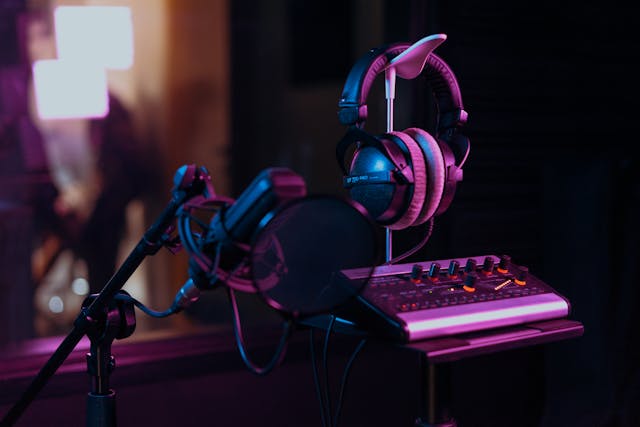
Studio headphones are essential for tracking, mixing, and mastering. Unlike consumer headphones, they are designed for a flat frequency response, ensuring accurate sound reproduction.
Closed-back headphones are ideal for recording because they prevent sound leakage into the microphone. Open-back headphones, on the other hand, are better suited for mixing due to their natural soundstage.
Popular models like the Audio-Technica ATH-M50x and Beyerdynamic DT 770 Pro are widely used by professionals in the U.S. for their reliability and sound accuracy. Comfort is also a key factor, especially during long recording sessions.
3. Audio Interfaces – The Studio Backbone
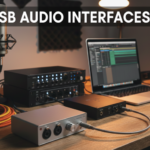
An audio interface acts as the bridge between your instruments or microphones and your computer. It ensures clean signal conversion and low latency, which is critical for real-time recording.
Devices like the Focusrite Scarlett 2i2 and Universal Audio Apollo Twin are among the most popular choices in the U.S. market. They offer high-quality preamps, durable build, and compatibility with most DAWs.
When selecting an interface, consider the number of inputs and outputs you need. Solo artists may only require two inputs, while bands or larger setups may need more advanced configurations.
4. Studio Monitors – Accurate Sound Playback
Studio monitors are specialized speakers designed to provide a true representation of your audio. Unlike consumer speakers, they do not artificially enhance bass or treble, allowing you to hear your mix accurately.
Brands like KRK, Yamaha, and ADAM Audio are well-known for producing high-quality studio monitors. Models such as the Yamaha HS8 and KRK Rokit 5 are commonly found in both home and professional studios across the U.S.
Proper placement of studio monitors is just as important as the monitors themselves. Position them at ear level and form an equilateral triangle with your listening position for optimal sound accuracy.
5. MIDI Controllers – Enhancing Creativity
MIDI controllers are essential tools for music producers who work with virtual instruments. They allow you to play, program, and control digital sounds with ease.
Controllers like the Akai MPK Mini and Novation Launchkey are popular choices for beginners and professionals alike. They provide a tactile experience that enhances creativity and workflow.
Whether you’re composing melodies or triggering drum samples, a MIDI controller can significantly improve your production process.
6. Studio Mixers – Managing Audio Signals
While not always necessary for small setups, studio mixers are invaluable for larger recording environments. They allow you to control multiple audio sources, adjust levels, and apply effects in real time.
Analog mixers offer a warm, classic sound, while digital mixers provide advanced features and flexibility. The choice depends on your workflow and recording needs.
7. Cables and Accessories – The Unsung Heroes
Often overlooked, cables and accessories play a crucial role in maintaining audio quality. Poor-quality cables can introduce noise and signal loss, compromising your recordings.
Invest in high-quality XLR cables, mic stands, pop filters, and acoustic treatment materials. These small additions can make a significant difference in your overall sound quality.
Choosing the Right Gear for Your Needs
Selecting the right professional audio gear depends on your goals, budget, and experience level. Beginners may benefit from all-in-one bundles, while advanced users often prefer custom setups tailored to their specific needs.
Key factors to consider include:
- Budget and long-term investment
- Type of content you create (music, podcast, voice-over)
- Available space and acoustic treatment
- Compatibility with your existing equipment
Final Thoughts
Professional audio gear is more than just equipment—it’s an investment in your creative future. The U.S. market offers endless options, but the key is choosing gear that aligns with your workflow and ambitions.
A well-balanced setup doesn’t have to be the most expensive—it just needs to be thoughtfully assembled. Start with the essentials, learn your tools, and upgrade gradually as your skills evolve.
In the end, great gear supports great creativity—but it’s your vision, skill, and dedication that truly bring your recordings to life.