How to Choose the Right Servo Planetary Gearbox for Precision
Precision isn’t just a requirement in modern engineering—it’s the foundation on which entire industries are built. From advanced robotics to high-speed CNC machines, the smallest deviation can lead to significant inefficiencies, material waste, or even system failure. That’s why selecting the right servo planetary gearbox is not a casual decision; it’s a strategic one that directly impacts performance, reliability, and long-term operational success.
A servo planetary gearbox plays a critical role in translating motor power into controlled motion. It modifies speed, enhances torque, and ensures that motion is delivered with exceptional accuracy. However, with so many options available in the market—varying in size, ratio, quality, and design—choosing the right one can feel overwhelming, especially if you’re aiming for high precision.
The key lies in understanding your application deeply. What level of accuracy do you need? How much load will the system handle? What are the environmental conditions? These questions are not optional—they are essential. A gearbox that works perfectly in one setup may fail completely in another simply due to mismatched requirements.
Beyond technical specifications, there’s also the matter of integration. The gearbox must align seamlessly with the servo motor and the rest of the system. Poor compatibility can lead to inefficiencies, increased wear, and costly downtime. That’s why engineers and decision-makers must evaluate both performance metrics and system harmony.
The term Servo Motor Planetary Gearbox is often used to describe a complete motion solution rather than just a component. It represents the integration of precision control and mechanical efficiency, making it indispensable in industries where accuracy is non-negotiable.
Table of Contents
- 1 Understanding the Basics of Servo Planetary Gearboxes
- 2 Why Precision Matters in Gearbox Selection
- 3 Key Factors to Consider When Choosing
- 4 Common Mistakes to Avoid
- 5 Matching Gearbox with Application Needs
- 6 Importance of Build Quality
- 7 Maintenance Considerations
- 8 Future Trends in Servo Planetary Gearboxes
- 9 Final Thoughts
Understanding the Basics of Servo Planetary Gearboxes
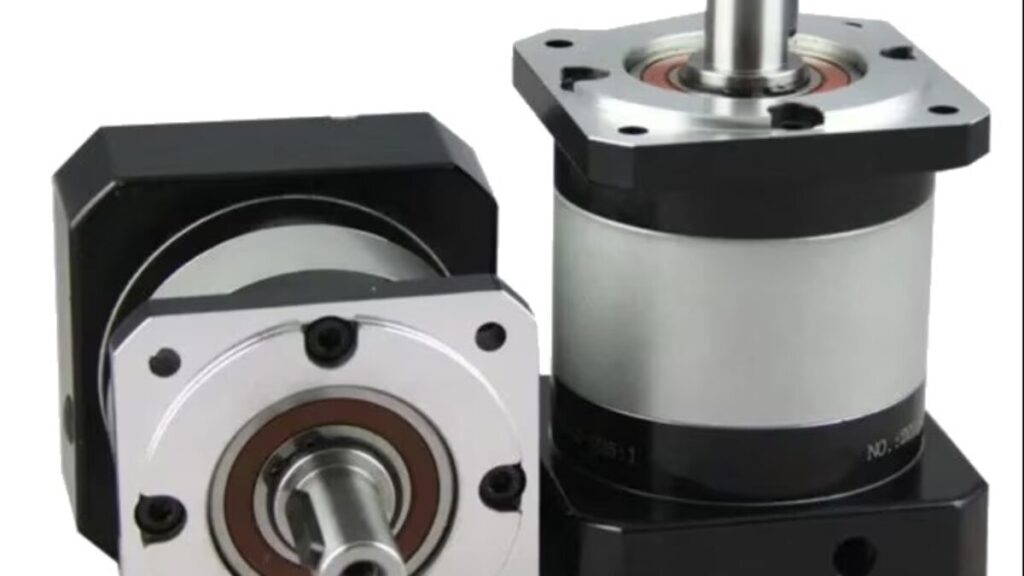
Before diving into selection criteria, it’s important to understand what makes these gearboxes unique. A planetary gearbox consists of three main components: a sun gear at the center, planet gears that revolve around it, and an outer ring gear. This configuration allows for multiple contact points, which improves load distribution and efficiency.
When combined with a servo motor, the gearbox enhances torque while maintaining precise control over speed and position. Unlike traditional gear systems, planetary gearboxes offer low backlash, high rigidity, and compact design—qualities that are essential for precision applications.
This design also minimizes energy loss, making the system more efficient. In high-performance environments, even small improvements in efficiency can lead to significant cost savings over time.
Why Precision Matters in Gearbox Selection
Precision is not just about accuracy—it’s about consistency. A system that performs accurately once but fails to repeat that performance is unreliable. In industries like medical equipment manufacturing or semiconductor production, even microscopic errors can have serious consequences.
Servo planetary gearboxes are designed to deliver repeatable accuracy. However, not all gearboxes are created equal. The level of precision depends on factors such as backlash, gear quality, and manufacturing standards.
Choosing the wrong gearbox can result in positioning errors, vibration, and reduced system lifespan. Therefore, precision should always be a top priority during the selection process.
Key Factors to Consider When Choosing
1. Torque Requirements
Torque is one of the most critical factors. You need to calculate both the continuous torque and peak torque required for your application. Undersizing the gearbox can lead to premature failure, while oversizing may result in unnecessary costs.
A well-matched gearbox ensures optimal performance without overloading the system. Always consider future load variations as well, not just current requirements.
2. Gear Ratio Selection
The gear ratio determines how speed and torque are modified. A higher gear ratio increases torque but reduces speed, while a lower ratio does the opposite.
Selecting the right ratio requires a balance between speed and torque. For precision applications, it’s important to ensure that the ratio supports smooth and accurate motion without causing delays or instability.
3. Backlash and Accuracy
Backlash refers to the slight movement between gear teeth. In high-precision applications, even minimal backlash can affect performance.
Look for gearboxes with low backlash ratings. Premium planetary gearboxes are designed to minimize this issue, ensuring tighter control and better positioning accuracy.
4. Efficiency and Power Transmission
Efficiency determines how much input power is converted into useful output. High-efficiency gearboxes reduce energy loss and improve overall system performance.
Planetary gearboxes typically offer efficiency levels above 90%, but it’s still important to verify specifications. Higher efficiency also means less heat generation, which contributes to longer lifespan.
5. Load Capacity and Durability
Your gearbox must handle both static and dynamic loads. Consider factors like shock loads, continuous operation, and potential overload conditions.
Durability is closely linked to material quality and design. High-quality gearboxes use hardened steel gears and advanced manufacturing techniques to ensure long-term reliability.
6. Mounting and Compatibility
Compatibility with the servo motor and system setup is crucial. Check mounting dimensions, shaft alignment, and connection types.
A poorly fitted gearbox can lead to misalignment, increased vibration, and reduced efficiency. Always ensure that the gearbox integrates seamlessly with your existing system.
7. Environmental Conditions
The operating environment can significantly impact gearbox performance. Factors such as temperature, humidity, dust, and exposure to chemicals must be considered.
For harsh environments, choose gearboxes with protective coatings, sealed designs, and appropriate lubrication systems. This ensures consistent performance even under challenging conditions.
Common Mistakes to Avoid
Even experienced professionals can make mistakes when selecting a servo planetary gearbox. Here are some common pitfalls:
- Ignoring backlash requirements: This can lead to precision issues.
- Overlooking thermal performance: Excess heat can damage components.
- Choosing based on cost alone: Cheap options may compromise quality.
- Neglecting future scalability: Your system may need upgrades later.
- Improper installation: Even the best gearbox can fail if installed incorrectly.
Avoiding these mistakes can save time, money, and operational headaches.
Matching Gearbox with Application Needs
Different applications have different requirements. For example:
- Robotics: Requires high precision and low backlash.
- CNC Machines: Demands smooth motion and high rigidity.
- Packaging Systems: Needs high speed and reliability.
- Automation Lines: Focuses on efficiency and durability.
Understanding your specific application helps in narrowing down the options and selecting the most suitable gearbox.
Importance of Build Quality
Not all gearboxes are manufactured to the same standards. High-quality gearboxes undergo rigorous testing and use premium materials.
Look for certifications and manufacturer reputation. A reliable brand often ensures better performance, support, and warranty options.
Investing in quality may seem expensive initially, but it pays off in the long run through reduced maintenance and longer lifespan.
Maintenance Considerations
Even the best gearbox requires proper maintenance. Regular inspection, lubrication, and alignment checks are essential.
Predictive maintenance techniques, such as vibration analysis and thermal monitoring, can help identify issues before they become serious problems.
A well-maintained gearbox not only performs better but also lasts significantly longer.
Future Trends in Servo Planetary Gearboxes
Technology is constantly evolving, and servo planetary gearboxes are no exception. Innovations in materials and design are making them more efficient and compact.
Smart gearboxes with integrated sensors are becoming increasingly popular. These systems provide real-time data on performance, enabling predictive maintenance and improved efficiency.
As automation continues to grow, the demand for high-precision gearboxes will only increase.
Final Thoughts
Choosing the right servo planetary gearbox for precision is a complex but essential process. It requires a deep understanding of your application, careful evaluation of technical specifications, and attention to detail.
From torque and gear ratio to backlash and environmental conditions, every factor plays a role in determining performance. A well-chosen gearbox not only enhances efficiency but also ensures long-term reliability.
In today’s competitive industrial landscape, precision is not optional—it’s a necessity. By making informed decisions and prioritizing quality, you can achieve the level of performance your application demands.
Ultimately, the right servo planetary gearbox is more than just a component—it’s a cornerstone of precision engineering.