Complete Guide to Video Microphones in the USA: Types and Features
Creating high-quality video content requires more than a good camera and lighting setup. Sound plays a crucial role in the overall experience of a video. In fact, many viewers are willing to tolerate average visuals, but they quickly lose interest if the audio quality is poor. That’s why professional YouTubers, filmmakers, and content creators in the United States invest heavily in video microphones.
Whether you are recording a vlog, shooting interviews, producing documentaries, or creating tutorials, the right microphone can transform the quality of your content. Modern cameras and smartphones can capture excellent video, but their built-in microphones often struggle with background noise and poor sound clarity. External video microphones solve this problem by capturing clearer, more focused audio.
In recent years, the demand for video microphones in the USA has increased significantly due to the rise of YouTube, podcasts, online courses, and live streaming. Creators now rely on specialized microphones such as shotgun mics, lavalier microphones, USB microphones, and wireless systems to improve sound quality and production value.
For beginners and professionals alike, understanding how microphones work and what features matter most can make a huge difference. If you are planning to upgrade your recording equipment or Buy Video Microphones in USA, learning about the different types and features available will help you make a smarter investment.
This complete guide explains the major types of video microphones, their features, how they work, and how to choose the right one for your content creation needs.
Why Video Microphones Are Important for Content Creators
Audio quality has become one of the most important factors in video production. A great microphone ensures that voices are clear, natural, and free from distracting background noise.
Most cameras and smartphones come with built-in microphones, but they capture sound from all directions. This means they often record unwanted noise such as wind, traffic, room echo, and background conversations.
External microphones, on the other hand, are designed to capture sound more precisely. They focus on the subject’s voice and reduce ambient noise, resulting in professional-quality audio.
Here are several reasons why video microphones are essential:
Better Sound Clarity
Professional microphones capture voices more accurately and naturally than built-in microphones.
Reduced Background Noise
Directional microphones reduce unwanted environmental noise.
Improved Production Quality
High-quality audio enhances the overall professionalism of videos.
Flexibility in Recording
Different microphone types allow creators to record in various environments such as studios, outdoor locations, and live events.
Audience Retention
Viewers are more likely to watch a video longer if the sound quality is clear and pleasant.
For content creators who want to build a professional brand online, investing in a good video microphone is often one of the first upgrades they should make.
Main Types of Video Microphones
There are many types of microphones used in video production. Each type has unique characteristics and is suited for specific recording situations.
Below are the most common microphone types used by content creators.
1. Shotgun Microphones
Shotgun microphones are among the most popular microphones used in filmmaking and professional video production.
These microphones are highly directional, meaning they capture sound primarily from the front while minimizing noise from the sides and rear. This makes them ideal for recording dialogue or narration during filming.
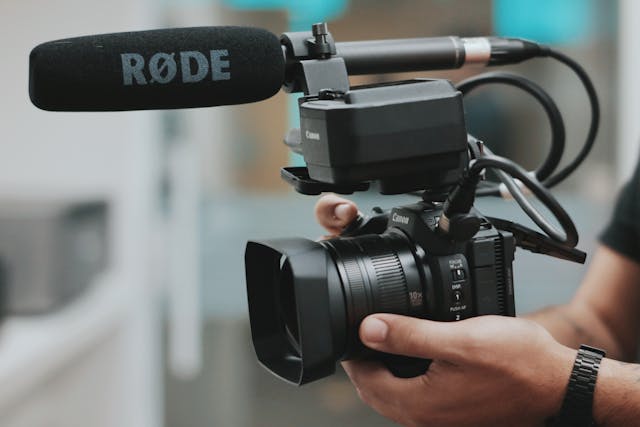
Shotgun microphones are often mounted on cameras or attached to boom poles so they can be positioned close to the subject.
Key Features of Shotgun Microphones
- Directional sound pickup
- Reduced background noise
- Ideal for outdoor recording
- Compatible with cameras and recorders
Best Uses
- YouTube videos
- Documentary filming
- Interviews
- Film production
Because they focus on sound from a specific direction, shotgun microphones are excellent for capturing dialogue even from a short distance.
2. Lavalier Microphones (Lapel Microphones)
Lavalier microphones, often called lapel mics, are small clip-on microphones that attach to clothing. These microphones are widely used in interviews, presentations, television broadcasts, and online video content.
They are compact, discreet, and allow hands-free recording.
Key Features of Lavalier Microphones
- Small and lightweight
- Clip-on design
- Hands-free recording
- Suitable for indoor and outdoor videos
Best Uses
- Interviews
- Educational videos
- Online courses
- News reporting
Because they remain close to the speaker’s mouth, lavalier microphones provide consistent audio levels even if the subject moves around.
However, they can sometimes pick up clothing rustling or background noise if not positioned correctly.
3. USB Microphones
USB microphones are extremely popular among YouTubers, streamers, and podcasters who record content from a desk or home studio.
These microphones connect directly to computers via USB, making them easy to use without additional audio interfaces.
Key Features of USB Microphones
- Plug-and-play connectivity
- Ideal for home studios
- High audio resolution
- Compatible with recording software
Best Uses
- Voiceovers
- Podcast recording
- YouTube commentary
- Live streaming
USB microphones are known for delivering studio-quality audio with minimal setup, which makes them perfect for beginners.
4. Wireless Microphones
Wireless microphones provide freedom of movement while recording. Instead of cables, these microphones transmit audio signals wirelessly to a receiver connected to the camera or recording device.
They are particularly useful for creators who move around during filming.
Key Features of Wireless Microphones
- Wireless signal transmission
- Compact transmitters and receivers
- Long recording range
- Mobility for presenters and vloggers
Best Uses
- Travel vlogging
- Fitness videos
- Interviews
- Documentary production
Wireless lavalier systems are especially popular among YouTubers and journalists who need mobility while recording.
5. Condenser Microphones
Condenser microphones are widely used in professional recording studios. They are extremely sensitive and capable of capturing detailed audio.
These microphones require power, usually supplied through batteries or phantom power.
Key Features of Condenser Microphones
- High sensitivity
- Excellent audio detail
- Ideal for studio environments
Best Uses
- Voiceovers
- Music recording
- Podcast studios
- YouTube narration
Because they capture a wide frequency range, condenser microphones produce rich and natural audio recordings.
6. Dynamic Microphones
Dynamic microphones are known for their durability and ability to handle loud sound sources. Unlike condenser microphones, they are less sensitive to background noise.
Key Features
- Durable construction
- Handles loud audio well
- Less sensitive to ambient noise
Best Uses
- Live streaming
- Podcasting
- Broadcasting
Dynamic microphones are often used by professional broadcasters because they produce clean voice recordings without capturing excessive background noise.
Important Features to Look for in Video Microphones
When choosing a microphone, several features determine its performance and usability.
Understanding these features will help you select the right equipment.
Polar Patterns
Polar patterns describe how microphones capture sound from different directions.
Common patterns include:
Cardioid
Captures sound mainly from the front.
Omnidirectional
Captures sound from all directions.
Bidirectional
Captures sound from the front and back.
Polar patterns affect how well a microphone isolates the subject’s voice from background noise.
Frequency Response
Frequency response refers to the range of sound frequencies a microphone can capture.
Human speech usually falls between 80 Hz and 15 kHz, so microphones designed for video often optimize this range for clear voice reproduction.
Sensitivity
Sensitivity determines how well a microphone picks up quiet sounds.
Highly sensitive microphones capture subtle details but may also pick up unwanted background noise.
Signal-to-Noise Ratio
This feature measures the difference between the desired sound and background noise.
A higher signal-to-noise ratio generally results in cleaner audio recordings.
Connectivity Options
Modern microphones offer several connectivity options:
- 3.5 mm audio jack
- USB connection
- XLR connection
- Wireless transmitters
Each option has its advantages depending on your recording setup.
Accessories That Improve Microphone Performance
Many accessories help improve microphone performance and audio quality.
Windshields
Windshields reduce wind noise during outdoor recordings.
Shock Mounts
Shock mounts prevent vibrations from affecting audio recordings.
Pop Filters
Pop filters reduce popping sounds caused by strong consonants such as “P” and “B”.
Boom Arms
Boom arms help position microphones properly during recording.
These accessories are often essential for achieving professional-level sound quality.
Choosing the Right Video Microphone
Selecting the right microphone depends on several factors.
Content Type
Vloggers often prefer shotgun microphones, while podcasters prefer USB or dynamic microphones.
Recording Environment
Outdoor recording requires directional microphones, while studio recording may benefit from condenser microphones.
Budget
Microphones are available in a wide price range, from affordable beginner options to professional equipment.
Portability
Travel vloggers often prefer compact wireless microphones that are easy to carry.
Understanding these factors helps creators choose equipment that suits their workflow.
Future Trends in Video Microphones
Microphone technology continues to evolve rapidly as the demand for online content grows.
Some emerging trends include:
- AI-powered noise reduction
- Wireless smartphone microphones
- Compact portable designs
- Multi-device compatibility
These innovations are making professional audio equipment more accessible for independent creators.
As content creation becomes more competitive, high-quality audio will remain one of the key factors that differentiate professional videos from amateur productions.
Conclusion
Video microphones are essential tools for anyone serious about content creation. Whether you are a YouTuber, filmmaker, educator, or live streamer, clear audio dramatically improves the quality of your videos.
From shotgun microphones designed for directional recording to lavalier microphones that provide hands-free audio capture, each type of microphone serves a unique purpose. USB microphones simplify studio recording, while wireless systems provide mobility and flexibility.
Understanding the types, features, and applications of video microphones allows creators to make informed decisions about their equipment. With the right microphone, even a simple video setup can produce professional-quality sound.
If you are planning to upgrade your audio setup or Buy Video Microphones in USA, take time to evaluate your content style, recording environment, and technical needs. The right microphone will not only improve your audio but also elevate the overall quality of your content.
In today’s digital landscape, where millions of videos compete for attention, excellent sound quality can be the difference between an average video and one that truly stands out.